UK FACT CHECK POLITICS

UK FACT CHECK POLITICS

Independent reporting, transparently verified by objective AI fact-checking
Menu
Get Involved
Account

Live: US and Israel attack Iran as Trump declares “major combat operations”

Live updates and fact checks on the US–Israel–Iran conflict. We’re tracking official statements, verified reporting, and claims circulating online — separating confirmed developments from misinformation, and adding context where it’s needed.

LIVE 1597 viewers
BREAKING
16m ago
No official confirmation from Tehran on reports about Khamenei

Reuters and Israeli media have reported that Iran’s Supreme Leader Ayatollah Ali Khamenei has been killed, citing unnamed “senior” Israeli officials. There has been no confirmation from Iranian authorities.

Reporting from Tehran, Al Jazeera correspondent Tohid Asadi said no official statement has been issued in Tehran so far.

He added that Iran’s foreign minister Abbas Araghchi told NBC News that, “as far as I know”, the Supreme Leader and other senior Iranian officials remained in good health.

Asadi also pointed to a statement attributed to Khamenei’s public relations office describing the reports as “mental warfare”.

“Of course, this is going to be huge news if it’s true,” Asadi said.

19m ago
Iran says Israel and the US ‘will pay’, Larijani warns

Ali Larijani, secretary of Iran’s Supreme National Security Council, has issued a warning to the US and Israel as strikes continue on targets across Iran.

According to Iran’s state news agency IRNA, Larijani said: “The brave soldiers and the great nation of Iran will give an unforgettable lesson to the international oppressive hellish ones.”

22m ago
Iran official warns of ‘psychological warfare’ after reports claiming Khamenei killed

A senior official in the public relations office of Iran’s supreme leader has accused Iran’s enemies of waging “mental warfare”, after Israeli media reports claimed Ayatollah Ali Khamenei had been killed, according to Iranian state media.

“The enemy is resorting to mental warfare — all should be aware,” the official was quoted as saying.

25m ago
Pro-government rallies reported across Iran after strikes

Large pro-government gatherings have been reported in several Iranian cities following the strikes, after hours of early confusion and then relative calm on the streets.

Crowds were seen in Mashhad, including around the Imam Reza shrine in north-east Iran, as well as in Rasht, west of Tehran. Earlier, a sizeable gathering was also reported in Palestine Square in central Tehran.

Participants appeared to be expressing anger at the attacks and support for Iran’s response, though the scale of the crowds and the wider public mood cannot be independently verified.

MEDIA
1h ago
CENTCOM releases video of missile launches and strikes

The US military’s Central Command (CENTCOM) has published footage appearing to show missiles being fired and aircraft launching from a naval vessel.

The video also shows impacts on multiple targets, though the locations and sites are not identified in the clip.

In a statement posted on X, CENTCOM said: “As the President stated, our objective is to defend the American people by eliminating imminent threats from the Iranian regime.”

It added: “The President ordered bold action. CENTCOM forces are delivering an overwhelming and unrelenting blow.”

BREAKING
3h ago
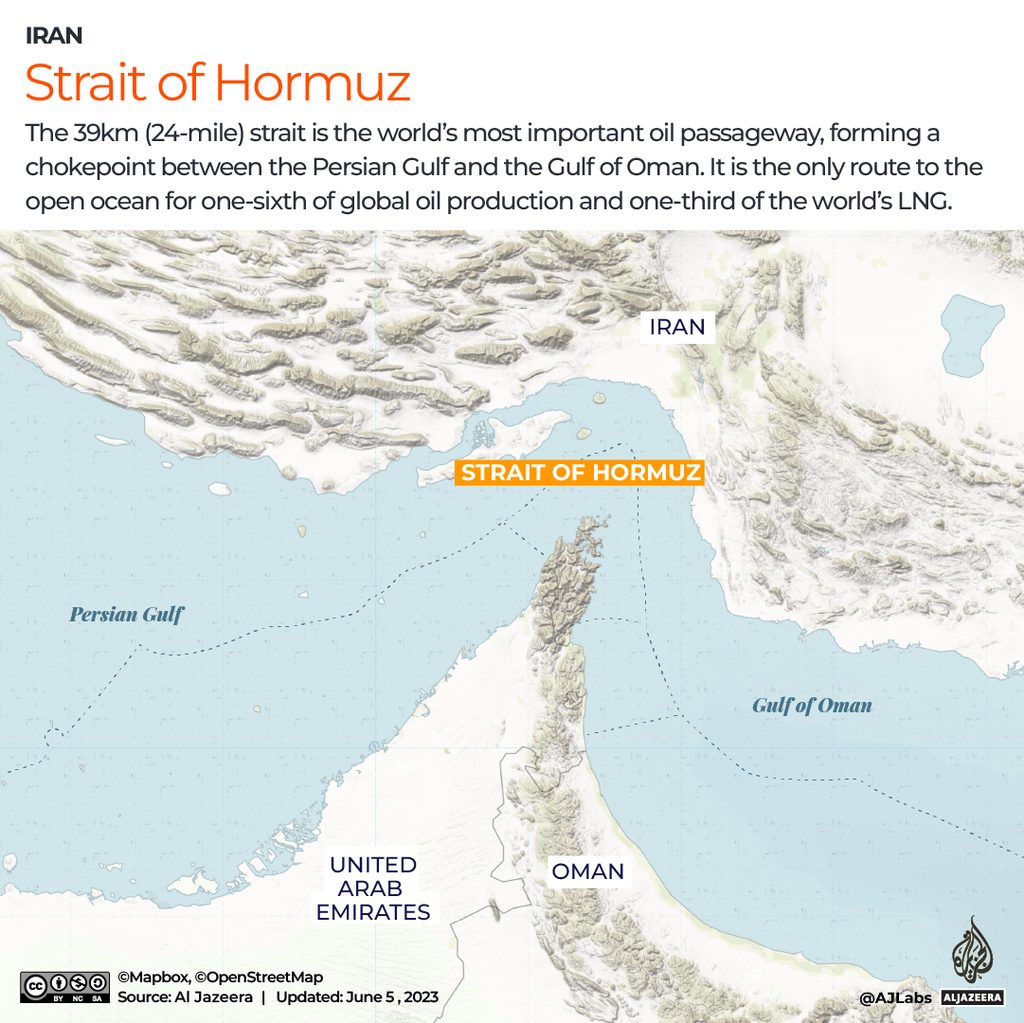
UKMTO says it cannot verify radio claims that the Strait of Hormuz is closed

UKMTO said it received multiple reports from ships that VHF Channel 16 broadcasts claimed the Strait of Hormuz “has been closed,” but said it could not independently verify the reports.

The agency warned of significant military activity and an increased risk environment, including potential electronic interference affecting AIS and communications, and noted that such broadcasts are not legally binding closures under international law.

FULL STORY HERE

4h ago
Report: Death toll rises to 85 after strike on girls’ primary school in southern Iran

Iran’s semi-official Tasnim news agency says the death toll from an Israeli strike on an elementary girls’ school in Minab, in the southern province of Hormozgan, has risen to 85.

The figure could not be independently verified.

BREAKING
4h ago
UN chief to address Security Council emergency meeting on Middle East

UN Secretary-General António Guterres is set to speak at the start of the UN Security Council’s emergency meeting on the situation in the Middle East at 21:00 GMT, according to confirmation received.

That is in about four and a half hours.

BREAKING
4h ago

Iran’s Fars news agency says more than 15 people were killed after a gymnasium in the city of Lamerd, in Fars province, was hit in US and Israeli attacks earlier today.

It said “initial estimates” put the death toll at above 15, adding that children were inside the hall “playing and exercising” at the time of the strike.

The reported casualty figure could not be independently verified.

MEDIA
4h ago
Trump and Netanyahu have telephone conversation

The office of Israel’s Prime Minister Benjamin Netanyahu has posted a photograph showing him on a phone call, saying he was speaking with US President Donald Trump.

Netanyahu is pictured seated at a desk, with the book Allies at War by Tim Bouverie visible beside him.

BREAKING
5h ago
Starmer says UK ‘played no role’ in US–Israel strikes on Iran as Britain boosts Middle East defences

Keir Starmer said the UK “played no role” in reported US and Israeli strikes on Iran, while confirming British aircraft are flying co-ordinated defensive missions in the region. He said protections for UK bases and personnel have been raised to the highest level and that the government is contacting UK nationals. Starmer chaired an emergency COBRA meeting as Iran launched retaliatory missile strikes.


FULL STORY

Prime Minister Keir Starmer has said the UK was not involved in US and Israeli military strikes on Iran, insisting Britain “played no role in these strikes”, as he confirmed British forces were operating in the region in what he described as co-ordinated defensive missions.

In a Downing Street statement on Saturday, Starmer said the government had strengthened the UK’s “defensive capabilities in the region” in recent days and that British aircraft were currently active as part of regional efforts to protect allied states and British interests amid rapidly escalating tensions.

“The United Kingdom played no role in these strikes,” Starmer said. He added that Britain stood “in support and solidarity with partners across the region” who were targeted in subsequent attacks.

“As part of our commitments to the security of our allies in the Middle East we have a range of defensive capabilities in the region – which we’ve recently taken steps to strengthen,” he said.

“Our forces are active and British planes are in the sky today as part of co-ordinated regional defensive operations to protect our people, our interests, and our allies – as Britain has done before, in line with international law.”

Starmer also said the UK had “stepped up protections for British bases and personnel to their highest level”, amid fears that Western facilities could be drawn into a wider confrontation following Iran’s response to the strikes.

The prime minister said the government was also working to support British nationals in the Middle East. “We are also reaching out to UK nationals in the region and doing everything we can to support them,” he said.

The UK statement came after the United States and Israel carried out joint attacks on Iranian targets in the early hours of Saturday, according to reports. Iran has since launched retaliatory missile strikes across the region, in an escalation that has heightened concerns of a wider conflict involving multiple states and armed groups.

Regional security alerts have been raised in several countries, with warnings issued to civilians to follow local guidance as air defence systems are activated and airspace restrictions have been imposed in parts of the region, according to reports.

Starmer’s comments sought to draw a clear distinction between the UK’s defensive posture and the offensive action taken by Washington and Jerusalem, while signalling that British military assets are positioned to help protect allies and UK forces stationed overseas.

He said Britain’s activity in the region was focused on defence, and framed the UK position as consistent with earlier episodes in which the country has supported partners against missile and drone attacks.

The prime minister also reiterated the UK’s longstanding position on Iran’s nuclear programme, saying Iran “must never be allowed to develop a nuclear weapon”, while urging restraint and a return to diplomacy.

“It is vital now that we prevent further escalation and return to a diplomatic process,” he said.

Starmer chaired an emergency meeting of COBRA on Saturday to co-ordinate the UK response, amid continuing developments and uncertainty over the scale and direction of further military action. The government has not set out detailed operational information about the defensive missions under way, beyond confirming British aircraft are active in the region.

Separately, travel and security advice has been tightened for British nationals in parts of the Middle East as the situation unfolds, with consular outreach under way. The government has not announced any evacuation plans but has urged British citizens in affected areas to remain alert and follow official guidance.

The crisis has also sparked immediate political reaction in Westminster. Opposition figures have taken differing positions, with some voices calling for stronger support for the US and Israel and others raising questions about the legality of the strikes and the risk of escalation. The government has so far avoided direct criticism of the US–Israeli action while emphasising that the UK did not participate.

The fast-moving conflict has raised concerns about the potential knock-on effects for energy markets and shipping routes, as well as the security of UK bases and personnel in the Gulf and elsewhere in the region.

Officials have not said whether the UK received requests for direct operational support linked to the strikes. Starmer’s statement did not address specific bases, but underlined that force protection measures have been raised to the highest level.

The UK has previously taken part in defensive action in response to Iranian drone and missile attacks in recent years, and Saturday’s statement suggested the government is preparing for further attempts to strike allied targets.

With Iran’s retaliation continuing to develop and international diplomatic efforts expected to intensify, Starmer’s government is attempting to maintain a dual message: distancing Britain from the initial strikes, while demonstrating readiness to help defend partners and protect UK nationals and assets.

The government said further updates would follow as the situation becomes clearer.

This is a developing story.

BREAKING
5h ago
BREAKING: Israel says it is striking missile launchers in Iran

The Israeli military says it has begun a new round of air strikes in Iran, targeting what it described as “missile launchers”.

In a statement, the army said Israeli aircraft were striking launch sites as part of efforts to disrupt further attacks. 

BREAKING
5h ago
BREAKING | Iranian missiles hit central Israel; no casualties reported

Initial reports indicate Iranian missiles have struck at least two locations in central Israel.

Emergency crews were dispatched to the sites, but no injuries have been reported so far.

The impacts come amid a fresh wave of launches from Iran, with alerts and sirens continuing for hours. Coastal areas including Tel Aviv and Haifa have been among the most affected by warnings.

BREAKING
5h ago
Qatar says air defences intercepted Iranian attacks as explosions heard across Doha

Multiple waves of explosions were heard across Doha as Qatar’s Ministry of Defence said it intercepted missiles aimed at the country and that all were stopped before reaching Qatari territory. Iran’s Revolutionary Guard said it began missile and drone operations in retaliation for US–Israeli strikes on Iran, with concerns focused on the nearby al-Udeid Air Base. Qatar has not reported casualties.


FULL STORY

Multiple waves of explosions were heard across Doha on Saturday morning as Qatar said it intercepted attacks aimed at its territory, amid Iranian retaliation targeting US military positions in the Gulf following joint US–Israeli strikes on Iran.

Residents across the capital reported hearing repeated loud blasts, with several interceptions visible in the sky. Plumes of smoke could be seen overhead where incoming objects appeared to have been engaged by air-defence systems, and officials warned of the risk of falling debris despite no confirmed impacts in populated areas.

Qatar’s Ministry of Defence said it had “successfully thwarted a number of attacks targeting the country’s territory” and that “all missiles were intercepted before reaching Qatari territory”. A Qatari official, cited by international news agencies, said at least two Iranian missiles were intercepted over the country.

From the ground in Doha, the pattern of blasts appeared to intensify over the course of the morning. Early sequences sounded like three or four explosions at a time, consistent with interceptions taking place overhead. In later waves, the number of blasts increased, with roughly six or seven heard within a short period, and in one burst around seven or eight distinct explosions could be counted in quick succession.

Some of the later sounds resembled sustained anti-aircraft fire, commonly associated with attempts to bring down unmanned aircraft. Iran fields a large drone arsenal, though there was no official confirmation of the types of weapons used in the attacks on Qatar and it was not possible to independently verify what was intercepted.

The attacks on Qatar were part of a wider Iranian response across the region. Iran’s Islamic Revolutionary Guard Corps confirmed the start of what it described as missile and drone operations in retaliation for strikes on Iranian targets earlier on Saturday. Media reports and official statements from several countries indicated that US facilities and allied military infrastructure in Bahrain, Kuwait, the United Arab Emirates and elsewhere were also threatened.

One focus of concern in Qatar is al-Udeid Air Base, the largest US military installation in the Middle East and the forward headquarters for US Central Command operations in the region. The base is outside the city but close enough for residents in Doha to see interceptions in the distance and hear the shock of detonations.

The morning’s events follow a major coordinated US–Israeli offensive against Iran launched in the early hours of Saturday. US President Donald Trump described the strikes as “massive” in public comments, while Iranian officials vowed retaliation. Iranian media reported significant casualties in Iran, including claims of dozens killed at a girls’ school in the country’s south; those figures could not be independently verified.

In Doha, the repeated detonations prompted residents to remain indoors and monitor official guidance. While Qatar’s authorities have emphasised that interceptions were successful, the visible smoke trails and bursts in the sky suggested a substantial volume of incoming fire, raising concerns about fragments falling into civilian areas.

Qatar operates Patriot missile batteries, which have previously been used to intercept regional threats, and local and regional reporting said Patriot systems were involved again on Saturday. Qatar has also discussed the potential deployment of the US-made THAAD system, which is designed to intercept ballistic missiles at higher altitudes, though its operational status in the country remains unclear. Defence specialists note that higher-altitude interceptions can reduce the risk of debris reaching the ground, but do not eliminate it.

Saturday’s attack revived memories of a similar episode last year, when Iran launched missiles towards al-Udeid in retaliation for earlier US action. In that incident, most incoming missiles were intercepted, with one reported to have landed without causing major damage. That precedent underscores both the strategic importance of Qatar as a host for US forces and the likelihood that Doha could again be drawn into the direct line of fire during a regional escalation.

US officials have signalled that the initial strikes on Iran may be the opening phase of a longer campaign, potentially lasting at least a week. If so, security officials and residents in Qatar expect further rounds of launches, interceptions and the continuing hazard of falling debris as the confrontation expands.

Qatari authorities have not reported casualties from Saturday’s interceptions. The situation remains fast-moving, with further alerts expected as air-defence activity continues in and around the capital.

5h ago
NATO ‘closely following’ Iran escalation as China calls for immediate ceasefire

NATO said on Saturday it was “closely following developments in Iran and the region”, as China called for an immediate ceasefire and urged that Iran’s sovereignty and territorial integrity be respected amid a fast-moving escalation triggered by joint US–Israel strikes and Iranian retaliation across the Gulf.

NATO spokesperson Allison Hart issued the alliance’s brief comment as governments assessed the risk of wider conflict following coordinated US–Israeli airstrikes on Iran earlier on 28 February and subsequent Iranian missile and drone attacks against US bases and other regional targets, according to reports.

China’s Ministry of Foreign Affairs said it had “deep concerns” about developments and urged all sides to avoid further escalation and resume dialogue. In its statement, Beijing said Iran’s “national sovereignty, security, and territorial integrity must be respected”, while warning that rising tensions would harm regional stability.

The statements from NATO and China came as international leaders and diplomats moved to contain the fallout from an operation the US president, Donald Trump, described as the start of “major combat operations”, in remarks reported by the Associated Press. The strikes, carried out in coordination with Israel, were presented by the White House as a response to Iran’s nuclear advances, the AP reported.

Iran responded with missile and drone strikes on US bases and other targets in the region, including sites in Bahrain, Qatar and the United Arab Emirates, according to the AP. Tehran has framed its actions as a defence of national sovereignty, while regional governments have condemned strikes on their territory in public statements and media reports.

European leaders sought to distance themselves from the initial strikes while urging de-escalation. In a joint statement, the leaders of the United Kingdom, France and Germany said they did not participate in the operation and called for a return to negotiations, while condemning Iranian attacks on regional countries. The UK government said it was in contact with partners and allies as the situation evolved.

In London, Prime Minister Keir Starmer convened an emergency meeting of the government’s Cobra committee following the strikes and Iran’s response, British media reported. UK officials have indicated Britain did not take part in the strikes and that British bases were not used in the operation, according to reports.

The NATO statement did not indicate any change in the alliance’s military posture or any move towards collective defence measures, and did not suggest a direct NATO operational role. Its language was limited to monitoring, as allies track threats to personnel, facilities and shipping routes linked to the crisis.

The conflict has already disrupted civilian aviation, with airspace restrictions and flight cancellations reported across parts of the Middle East. Markets and governments have been watching for signs of impact on energy infrastructure and maritime transit routes, given the region’s role in global oil and gas supply.

The scale of damage inside Iran and across affected bases and sites in the Gulf remained unclear in early reporting, including the full extent of casualties. News agencies have cited reports of civilian deaths, including at least one incident involving a school, though details were still being verified.

China’s call for an immediate ceasefire placed it among the most explicit major-power appeals for a halt to hostilities issued so far on Saturday. Beijing also reiterated its position that pressure and threats would worsen tensions, urging renewed diplomacy.

Further statements were expected from capitals in Europe and the Middle East as diplomats assessed the likelihood of additional strikes and counterstrikes, and as governments reviewed security for forces and citizens across the region. NATO’s Hart said only that the alliance was “closely following” the situation, underscoring the uncertainty over whether the crisis will remain contained or broaden further in the coming hours and days.

BREAKING
5h ago
Iranian officials report at least 70 killed in Hormozgan attacks as explosions reported in Shiraz

Explosions were reported in Iran’s south-western city of Shiraz on Saturday as Iranian officials said at least 70 people had been killed in attacks in the southern province of Hormozgan, and the country’s foreign minister said the supreme leader, Ayatollah Ali Khamenei, was alive “as far as I know”.

Iran’s semi-official Fars news agency reported several explosions in Shiraz, without immediately providing details on casualties or the locations struck. The reports could not be independently verified.

In Hormozgan province, the head of Hormozgan Medical Sciences told Fars that at least 70 people had been killed and more than 90 wounded in attacks on Minab and Jask. Those figures could not be immediately verified. Earlier reports said an elementary girls’ school in Minab was hit, with more than 50 people reported killed.

The developments come amid a fast-moving escalation in and around Iran following reported US and Israeli strikes across multiple Iranian locations. President Donald Trump has described the operation as the start of “major combat operations”, according to reporting carried by international media. Iran has said it has responded with missile and drone attacks against Israel and US-linked bases in the Gulf.

In an interview with NBC News, Iran’s Foreign Minister Abbas Araghchi said Khamenei was alive “as far as I know”, amid widespread speculation about the leader’s status following strikes reported in the capital.

Araghchi told NBC there was no communication with the United States “as of now” and said that if Washington wanted talks “they know how to reach out to the Iranians”, but added that attacks would have to stop before there was any possibility of negotiations.

He also dismissed Mr Trump’s reported messaging about regime change as “mission impossible”, while saying there remained “a possibility” of reaching a deal that could guarantee Iran’s nuclear programme is peaceful.

Araghchi said “one or two commanders were killed”, but that most officials were alive. He also said Iran does not have the capability to hit the US and would not build missiles that could do so.

In Washington, Republican congressman Thomas Massie said he was “opposed to this war”, writing on social media that US involvement was “not ‘America First’”. He said he would work to force a Congressional vote on any war with Iran, adding: “The Constitution requires a vote, and your Representative needs to be on record as opposing or supporting this war.”

The reported casualty figures in Hormozgan are likely to intensify international scrutiny of the strikes and the conduct of the conflict, particularly following the accounts of a school being hit in Minab during school hours. No immediate confirmation was available from the US or Israel regarding the specific incidents reported by Iranian outlets.

Iranian authorities and state-linked media have issued differing tallies throughout the day, and communications disruptions and access constraints have made independent verification difficult.

Further updates are expected as officials in Iran, the US and Israel issue additional statements and as the scale of reported damage and casualties becomes clearer.

5h ago
FULL STORY SO FAR: Air raid alerts across Israel after Iranian missile launches as UK joins European call for talks

Air raid alerts were activated in several areas across Israel on Friday after missiles were detected heading towards Israeli territory from Iran, the Israeli military said.

In a post on X, the military said the alerts had “been activated in several areas across the country following the detection of missiles launched from Iran toward Israeli territory”, adding that “at this hour, the air force is operating to intercept and strike wherever necessary to remove the threat”.

The developments mark a sharp acceleration in the regional confrontation, with multiple governments urging restraint and renewed diplomacy, and with nuclear talks in Geneva thrown into doubt as strikes and interceptions were reported across parts of the Middle East.

In a separate statement, the Israeli military said it had completed what it described as “an extensive wave of strikes” against Iran’s strategic defence systems. It claimed one target was an advanced SA-65 air defence system in the Kermanshah area of western Iran. The Israeli claims could not immediately be independently verified.

There were no confirmed reports of injuries in Israel in the immediate aftermath of the latest alerts, according to information available by early afternoon GMT, although reports of direct impacts circulated on social media. Footage and detailed reporting of strike locations inside Israel remained limited, with the Israeli military having issued warnings that videos and reports of direct impacts are not permitted.

In the occupied West Bank, loud explosions could be heard as Israel’s air defences intercepted incoming missiles, according to reporting from Ramallah. Residents there do not have access to bomb shelters in their homes and often rely on sirens heard in the distance to understand when incoming attacks are under way, the report said.

In Qatar, a fresh round of missile interceptions was visible over Doha, where an Al Jazeera reporter counted at least five blasts and described white trails in the sky. A Qatari Defence Ministry official told Al Jazeera that an early-warning radar in northern Qatar had been targeted in an Iranian attack.

Saudi Arabia’s Foreign Ministry confirmed Iran had targeted Riyadh and the kingdom’s eastern region, saying the attacks were repelled. The ministry condemned the strikes, saying they “cannot be justified under any pretext or in any way”, and added that the attacks came despite Iranian authorities being aware the kingdom had said it would not allow its airspace or territory to be used to target Iran.

Leaders in Qatar and the United Arab Emirates also condemned Iranian missile strikes, according to a statement from Qatar’s Emir Sheikh Tamim bin Hamad Al Thani’s office following a discussion with UAE President Sheikh Mohamed bin Zayed Al Nahyan. The statement said the two leaders condemned the targeting of Qatar, the UAE and other Arab countries by Iranian missiles, and affirmed solidarity and continued coordination.

In Europe, the UK joined France and Germany in condemning Iranian attacks and calling for negotiations to restart. In a joint statement, UK Prime Minister Keir Starmer, French President Emmanuel Macron and German Chancellor Friedrich Merz said they reiterated their commitment to regional stability and the protection of civilian life, and said they wanted a resumption of talks.

Turkiye’s Foreign Ministry issued a separate statement calling on all parties to cease attacks “immediately”, warning against “provocations” that could lead to wider escalation and saying Ankara was ready to support mediation efforts.

The latest exchanges also prompted fresh travel warnings. The Russian embassy in Iran urged Russian citizens to leave the country via Armenia or Azerbaijan, both of which border Iran to the north-west. The US embassy in Lebanon urged US citizens to leave the country, posting its advice on X.

In Tehran, signs of strain were visible as authorities prepared for the possibility of further attacks. Heavy traffic was reported outbound from the capital, particularly towards provinces to the north, after Iran’s Supreme National Security Council urged nearly 10 million residents to leave Tehran, according to reporting from the city. Authorities were said to be facilitating movement by delivering fuel along major congested expressways.

Iranian Red Crescent spokesperson Mojtaba Khaledi was quoted as saying at least 20 of Iran’s 32 provinces had been targeted, and urged citizens to stay away from points of impact. The government has emphasised it has enough food and fuel, and said ministers and governors of border provinces had been given additional authority to import essential goods when necessary.

Universities and schools were ordered closed until further notice, with classes to move online where possible, according to the Tehran reporting. Many had already shifted online in recent weeks amid student protests, the report added.

Separately, Iran’s IRGC-affiliated Fars news agency reported that Basij paramilitary forces would begin patrolling Tehran’s streets overnight. One of the targeted sites in Tehran was reported to be in Narmak, in the east of the city, around the believed residence of former president Mahmoud Ahmadinejad, though details were not confirmed. Numerous videos circulating online appeared to show strikes, but the locations and timings could not immediately be verified.

The widening crisis has also disrupted diplomatic efforts focused on Iran’s nuclear programme. In Geneva, where talks were taking place with Oman acting as a mediator, there was “dismay” among diplomats as the escalation unfolded, according to reporting from the city. Oman’s Foreign Minister Badr bin Hamad Albusaidi had been speaking to US media just hours earlier about the possibility of a deal, but the strikes have since raised doubts about whether talks can continue.

Iran had warned previously that if a war broke out it would not show restraint as it had in earlier rounds, according to the Geneva report. While attacks have been reported on US military personnel in the region, the same report noted that there had not yet been confirmed reactions from Iran-aligned armed groups in places such as Yemen and Iraq.

In Washington, the White House said reports that President Donald Trump would deliver an address on Friday morning were inaccurate, and said there was no address scheduled and no guidance given to media about remarks.

The confrontation has also had immediate implications for energy infrastructure. Israel’s energy sector began shifting into emergency mode as the country braced for missile attacks, according to the Israeli newspaper Haaretz. It reported that Bazan Group had partially shut down facilities at its Haifa refinery, and that Energy Minister Eli Cohen ordered a temporary halt to some offshore gas platforms and was expected to declare a state of emergency in the natural gas sector.

The Israeli strikes on Iran earlier on Friday reportedly included an attempt to hit senior Iranian figures. An Al Jazeera explainer identified Ali Shamkhani, a former commander of Iran’s Islamic Revolutionary Guard Corps and currently a political adviser to Supreme Leader Ayatollah Ali Khamenei, as among those Israel targeted. Shamkhani, 70, previously held senior posts including defence minister and secretary of the Supreme National Security Council, and was involved in the implementation of the 2015 nuclear agreement. He was pulled alive from rubble after an attack on his home in Tehran last year during a 12-day war involving Israel and the US, according to the same account. There was no official confirmation of his condition on Friday.

Analysts said the pace and breadth of attacks suggested a rapidly moving conflict with unclear off-ramps. Rashid al-Mohanadi, a nonresident fellow at the Middle East Council on Global Affairs, said Qatar’s priority would be de-escalation, while Ali Vaez, the Iran project director at Crisis Group, described the US-Israel action as a “war of choice” and a “war of opportunity”, arguing it appeared driven by the perception that Iran had been weakened in recent years.

For now, the scale of damage and any casualty figures on either side remain unclear. Officials in several capitals have issued calls for restraint, but with strikes, interceptions and air raid alerts continuing, the situation remains fast-moving.

BREAKING
6h ago

Saudi Arabia has confirmed that Iran targeted Riyadh and the kingdom’s Eastern Province, saying the attacks were intercepted and repelled, according to a statement from the Saudi Foreign Ministry.

The ministry condemned the strikes, saying they “cannot be justified under any pretext or in any way”. It added that the attacks came despite Iran being aware that the Kingdom had stated it would not allow its airspace or territory to be used to launch attacks on Iran.

6h ago
Why did the US and Israel attack Iran?

US and Israeli strikes on Iran are rooted in years of confrontation over Tehran’s nuclear programme and its regional influence.

Both allies argue that Iran’s expanding uranium enrichment and its missile capabilities pose a major security threat, and have repeatedly said they are prepared to use force to prevent Iran from acquiring a nuclear weapon.

In June last year, the US and Israel carried out attacks on Iranian nuclear and military targets. Those operations included strikes on facilities inside Iran and assassinations of senior commanders, according to reports and official statements at the time.

Iranian officials — including President Masoud Pezeshkian — insist the country will never develop nuclear weapons.

US intelligence agencies and the UN nuclear watchdog have said they have not found evidence that Iran is currently building an atomic bomb. However, Israel and some figures in the Trump administration have continued to argue that Iran is pursuing a weapons capability and that military action is necessary to stop it.

BREAKING
6h ago
Air Raid Sirens Sound Across Israel After Missiles Detected From Iran

Air raid alerts have sounded across Israel after the Israeli military said missiles were detected launching from Iran toward Israeli territory.

In a post on X, the Israel Defense Forces (IDF) said alerts had “been activated in several areas across the country” and that the air force was “operating to intercept and strike wherever necessary to remove the threat”.

In a separate post, the IDF said it had completed an “extensive strike” against Iran’s strategic air-defence systems. An attached statement said one of the targets hit was an advanced SA-65 air-defence system in the Kermanshah area of western Iran.