

In his resignation letter of 11 June, John Healey wrote that the government's Defence Investment Plan "falls well short of what is required for defence and the country at this dangerous time." He accused Sir Keir Starmer of being "unable" to fund what the armed forces needed, and the Treasury of being "unwilling". The letter helped push Starmer's premiership to the brink. Less than three months later, Healey is Chancellor of the Exchequer in Andy Burnham's government, and the Treasury he accused of unwillingness is his.
The Falkland Islands have become the first hard test of what that letter meant. President Javier Milei of Argentina announced sanctions on the British company Rockhopper Exploration and the Israeli firm Navitas Petroleum over the Sea Lion oilfield, told his audience the United Kingdom was in decline and said the islanders "do not have a legitimate right to self-determination". President Donald Trump, in an interview broadcast the previous day, declined to say the United States would come to Britain's aid, and tied that hesitation directly to British defence spending. The row has landed inside a Labour Party already split over the same question. The minister who now controls the money is the one who quit over it.
Milei's move is an escalation of a long-running Argentine campaign of legal and commercial pressure rather than a new front. Buenos Aires sanctioned Navitas in 2022 with a 20-year ban, and moved against Harbour Energy and Chrysaor in 2021. The Sea Lion field, north of the islands, is estimated to hold about 1.7bn barrels, with first oil due in 2028. What is new is the American dimension: Milei cited Trump's review of the US position on the islands as evidence that his words were, in his framing, not empty ones.
Trump's comments to GB News, aired on 3 September, were unusually direct. Asked whether he would come to Britain's aid in a Falklands conflict, he said: "I just don't know if you have the capacity to do that. The Falklands is very interesting because your country is not the same country it was 20 years ago, 25 years ago." He linked that to Britain's refusal to support American action against Iran. "Your country's not doing well. Don't forget, you get a big percentage of your oil from the Strait of Hormuz, and you weren't there to help me. Your country was not there to help me. We didn't need help, but I did ask Nato, and I asked your former leader, 'why didn't you send a couple of ships?'" He said Starmer had told him no vessels were available, which "was pretty sad". He has previously told the BBC that the US position on the Falklands is one of many under review.
That review is not rhetorical. A leaked Pentagon memo last month indicated the United States could reassess its diplomatic support for British sovereignty as part of a wider effort to press Nato allies to meet spending pledges, with one senior US official telling the Telegraph that the UK was set for "special attention". Sarah Rogers, a senior State Department official, posted a photograph with Milei on X ahead of his speech alongside the words "exciting things are happening in the Western Hemisphere".
The British response has so far been conducted on social media and at the Downing Street lobby briefing. The Foreign Secretary, Ed Miliband, wrote on X: "The Islands are British and will remain so because that is the overwhelming position of the Islanders. Their right of self-determination is paramount, grounded in international law and we will resolutely uphold it." The Defence Secretary, Wes Streeting, wrote: "Milei's statement overnight tells us more about domestic politics in Argentina than it does about the Falkland Islands. The Falklands are British because Falkland Islanders choose to be British. Our commitment to the Falklands is absolute and unshakeable."
A Downing Street spokesperson described the government's position as "unwavering", said Burnham "fully supports the wishes of the islanders to remain a British overseas territory" and noted it was "not the first time" an Argentine government had made economic threats. Pressed on whether the Prime Minister believed Britain had the forces necessary to defend sovereignty, the spokesperson said: "our armed forces are on standby 24/7 to protect the UK and our interests," and that "they will remain so far as long as the islanders wish." The Foreign Office minister Uma Kumaran had already told the Commons on Tuesday 1 September, before Milei spoke, that the UK position was "long-standing and unwavering". Friday is a private members' bill day, on which ministerial statements are not made by convention; the first opportunity for a statement or an urgent question is Monday 7 September.
The sharper pressure has come from Labour's own benches. At Burnham's first Prime Minister's Questions on Wednesday 2 September, Tan Dhesi, the chair of the Commons defence select committee, challenged the Prime Minister to "urgently commit to charting a pathway to reaching 3 per cent of GDP spend on defence by 2030", a level of spending which, he said, "as his chancellor rightly noted, is critical to keeping our country safe". Dhesi added that "defence is definitely one area where vibes alone just isn't going to be enough". Burnham appeared to accept the 3 per cent target; Downing Street later issued a clarification stating that it was not a commitment.
Speaking to LBC the following day, Dhesi went further, arguing that the Prime Minister's failure to commit was putting the islands at risk. "Some of our allies are also pointing out that if we don't spend effectively on defence, we've got the likes of Donald Trump making threats about the sovereignty of the Falkland Islands," he said.
Kemi Badenoch, the Conservative leader, is attacking on two fronts, accusing Burnham of "kicking defence spending into the long grass" and tying the crisis to the handover of the Chagos Islands to Mauritius. Her party has pledged 3 per cent of GDP by 2030. "Britain does not surrender to bullies," she said, but "the madness of surrendering the Chagos Islands means other countries are now trying their luck." At PMQs she urged Burnham to cut welfare spending and put the money into defence. Emily Thornberry, who chairs the foreign affairs committee, took a different line, saying Milei "should keep his electioneering off British territory and focus on inflation, poverty and paying back its loan from the IMF".
The immediate military picture is less alarming than the political one. The garrison at RAF Mount Pleasant numbers about 1,500 personnel by the most commonly cited figures, including a roulement infantry company of around 120 that rotates four times a year. It has four Typhoon FGR4 jets on round-the-clock readiness, the Sky Sabre air defence system, a permanently based A400M transport aircraft and the offshore patrol vessel HMS Medway. In May, the defence minister Al Carns told Geoffrey Cox MP that the posture was "appropriate", and the UK Defence Journal assesses that Argentina is not a credible power able to threaten the islands. It has bought 24 F-16s from Denmark for around $300m and 235 Stryker armoured vehicles from the United States, and is forecast by GlobalData to be spending $1.9bn a year on defence by 2029.
The deeper problem is what would happen if deterrence failed. The Royal Navy's amphibious assault ships were retired before the Defence Investment Plan, and the plan downgraded their replacement to smaller vessels developed with the Netherlands, the first of which are not due in service until the 2030s. An analysis published by Airforce Technology argues that without amphibious shipping there is no viable way to launch a recovery operation, and claims the navy has no nuclear attack submarines at sea and around five functioning frigates. Neither aircraft carrier is in the region; the passage from Portsmouth is some 8,000 miles and takes roughly four weeks.
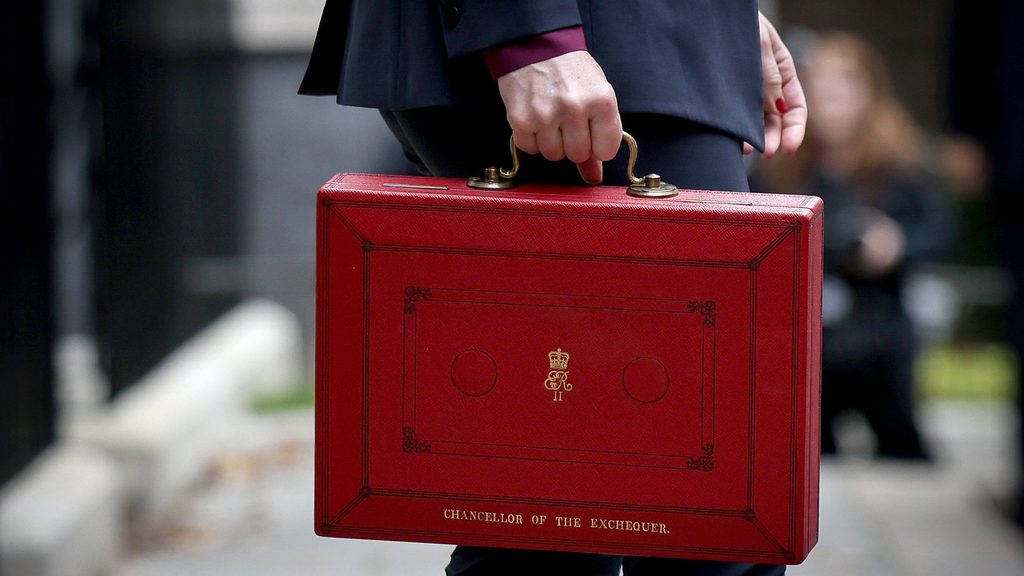
Closing that gap means money, and the money is Healey's. On 1 September the Resolution Foundation urged the Chancellor to be prepared to raise taxes on middle earners, increasing the "tax wedge", in order to fund defence. It is the bill for the argument he made in June, arriving on his own desk.



Join the Discussion
Have something to say? Join the conversation!
Sign in to share your thoughts and engage with other readers.
Sign In Create AccountNo comments yet
Be the first to share your thoughts on this article!