

The government has begun chartering flights to bring British nationals home from the Gulf and wider Middle East, the Foreign, Commonwealth and Development Office (FCDO) said on Thursday, as continuing Iranian strikes and airspace restrictions leave large numbers of travellers stranded.
Foreign Secretary Yvette Cooper, speaking from the Foreign Office Crisis Response Centre in London, said teams in the UK and across the region were working “24 hours a day” with airline operators and regional governments to secure additional capacity and alternative routes back to Britain while parts of Gulf airspace remain restricted or closed.
“Continuing Iranian airstrikes against our partners mean that across the Gulf, there are still airspace restrictions and closures in place, and that means there are many British holidaymakers [and] business people who can’t yet get home,” Cooper said in a video message.
The FCDO said the first government charter flight had taken off from Muscat, Oman on Thursday, bringing British nationals back to the UK, “including many who are vulnerable”. Further charter flights are planned in the coming days, with British nationals in Oman to be contacted as flights become available.
Cooper said more than 4,000 people returned to the UK from Dubai and other parts of the Gulf on increased commercial flights on Wednesday, taking the number of arrivals over the past two days to more than 5,000. She thanked airlines, airport operators and governments in the region for working with the UK to support British citizens.
The Foreign Secretary said the government’s charter flights were being used in part to prioritise those most in need of help. “The UK government is also chartering some additional flights … particularly to help those who are more vulnerable,” she said, adding that the first of those flights had taken off earlier on Thursday.
Downing Street said Prime Minister Keir Starmer had also confirmed the first UK government flight to bring citizens home had departed and that around 4,000 had already returned. This remains only a small fraction of the roughly 140,000 British nationals who have told the government they are in the region; however, it is unclear how many of those people intend to return to the UK, and what overall flight capacity is available to bring them home.
The operation is taking place amid a fast-moving security situation that has repeatedly disrupted civilian aviation across the Gulf. Cooper warned that airspace restrictions were continuing and that the conflict could last for some time, describing the uncertainty as “incredibly stressful for families or business travellers who are desperate to get back home”.
She said staff at the Crisis Response Centre, along with rapid deployment teams sent to the region, would continue working “round the clock” until British nationals could return “as quickly and as safely as possible”. Cooper urged those still in the region to stay in contact with their airline and to follow FCDO travel advice for updates. “The safety and security of British citizens is our top priority,” she said.
The FCDO confirmed that Rapid Deployment Teams were in Oman and Saudi Arabia to assist British nationals on the ground. The department also repeated advice for British nationals in Bahrain, Israel, Kuwait, Palestine, Qatar and the United Arab Emirates to register their presence so the FCDO can share important information, and to continue following both FCDO Travel Advice and local authority guidance.
The government’s repatriation effort comes as the UK also moves to bolster what it describes as defensive military operations in the region. Starmer said the UK would send four fighter jets to Qatar to strengthen UK defensive activity as US-Israel strikes on Iran continue, while he defended his decision not to join the initial strikes. “My focus is on providing calm, level-headed leadership,” he said, according to remarks reported from a press appearance.
The aviation disruption has created pressure on governments and airlines to manage demand and provide reliable information to passengers. Earlier on Thursday, one passenger on board the first government flight told the BBC it had been a “shambles” after it was delayed due to a technical issue, highlighting the difficulties of operating under heightened security conditions and fluctuating airspace access.
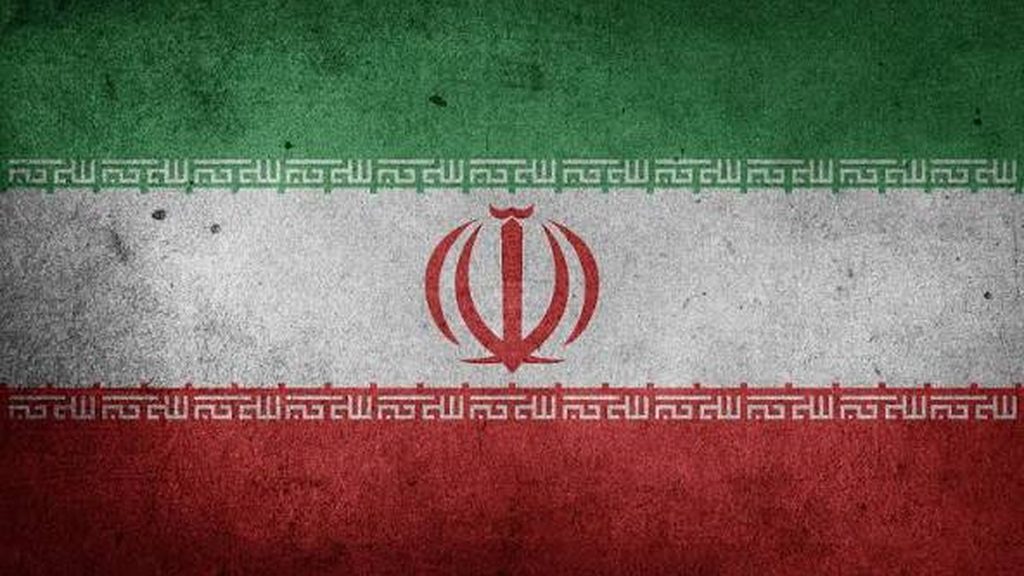
Regional governments continued to report attacks and interceptions on Thursday. The UAE said it intercepted six Iranian missiles and 131 drones, although it said one missile and six drones fell inside the country. Explosions were also reported in Qatar and Bahrain, while Azerbaijan said it was attacked by two Iranian drones. Separately, a tanker was reported damaged in the northern Gulf, with Iran saying it had hit a US ship.
New images emerging from Tehran showed damage after six days of strikes, with explosions seen across the Iranian capital. In Israel, the military reported new attacks from Iran, with explosions visible in the sky.
UK officials said the combination of ongoing military action and rapidly changing airspace restrictions means travel options can open and close at short notice, and they have emphasised that travellers should not attempt to reach airports for charter flights unless contacted directly.
Cooper said officials would continue working with commercial providers to add flights and secure additional routes. “Teams are working hard … with airline operators and regional governments to get extra flights in place and extra routes back home,” she said.


Join the Discussion
Have something to say? Join the conversation!
Sign in to share your thoughts and engage with other readers.
Sign In Create AccountNo comments yet
Be the first to share your thoughts on this article!