

Prime Minister Sir Keir Starmer has ordered an independent review into foreign interference in UK politics after Nathan Gill, a former leader of Reform UK in Wales, was jailed for taking money to make pro‑Russian statements.
Downing Street said the review will examine whether current safeguards are strong enough to prevent covert foreign influence, including through political finance and other routes used to shape public debate. Ministers said the work would focus on strengthening resilience ahead of future elections and would be treated as a national security priority.
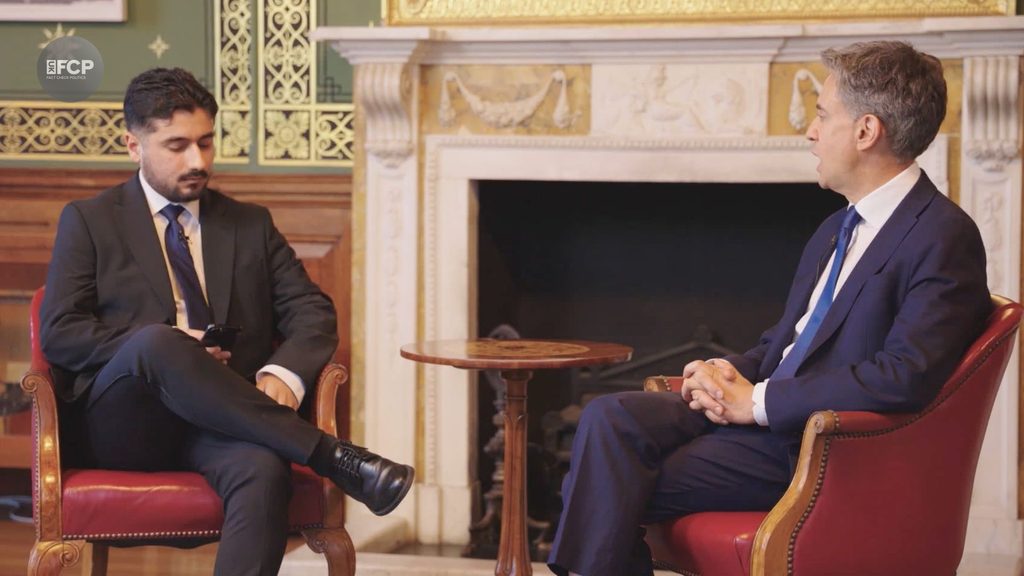
Housing Secretary Steve Reed said Gill’s actions were “a stain on our democracy”, adding that the case had exposed vulnerabilities that must be addressed to ensure “it can never happen again”.
Gill, 52, a former UKIP and Brexit Party MEP who later briefly led Reform UK in Wales in 2021, was sentenced on 21 November at the Old Bailey to 10 years and six months in prison after pleading guilty to eight counts of bribery. Prosecutors said he accepted about £40,000 between December 2018 and July 2019 in return for advancing pro‑Russian narratives in the European Parliament and in media commentary relating to Ukraine.
The judge, Mrs Justice Cheema‑Grubb, said Gill had “abused a position of significant authority and trust” and that the damage caused by his conduct was “indeed profound”. She said the offending had “fundamentally compromised the integrity” of a democratic institution.
Investigators said Gill took instructions from Oleg Voloshyn, described in court as a pro‑Russian Ukrainian politician linked to Kremlin‑aligned networks. The payments were concealed through coded references in messages, including descriptions such as “X‑mas gifts”, “postcards” and mentions of “5K”, the court heard.
The case began to unravel after Gill was stopped at Manchester Airport on 13 September 2021 under counter‑terrorism powers. Analysis of his mobile phone and subsequent enquiries led to the criminal investigation and prosecution, according to authorities.
Starmer, speaking after ordering the review, said the conviction underlined the need to protect democratic life from hostile state activity, arguing that public confidence depends on the integrity of elected representatives and the transparency of political influence. A formal remit has not yet been published in full, but officials said it will look at how foreign actors might seek to exploit gaps in rules on donations, lobbying and political campaigning, including the use of opaque funding channels.
The review is being led by Philip Rycroft, a former permanent secretary, and is expected to report by March 2026. Government officials indicated it will consider whether additional powers or enforcement tools are required for regulators and law enforcement, as well as whether existing disclosure requirements are adequate in an environment where influence operations can be blended with online campaigning.
The development comes as the UK continues rolling out the Foreign Influence Registration Scheme, designed to require the registration of certain activities carried out at the direction of foreign states. Russia is treated as a higher‑risk priority under the scheme, reflecting long‑running warnings from the security services about interference threats.
Gill’s conviction has also intensified political scrutiny of Reform UK, despite the offending relating to a period when he was active as an MEP rather than as a UK parliamentary candidate. Reform UK has said Gill is “ancient history” and described his actions as reprehensible, distancing the party from his conduct. However, Starmer has publicly challenged Reform leader Nigel Farage to satisfy himself that no wider links existed between the party and Russia, prompting a sharp exchange in which Reform figures accused Labour of its own questionable overseas associations.
Security minister Dan Jarvis said the case illustrated how bribery and influence activity can be used to advance “the malign interests of Russia” and that the government would treat the protection of democratic institutions as integral to national security.
Civil liberties campaigners and some legal commentators have previously cautioned that broad foreign interference rules could risk overreach if not tightly defined, particularly where political speech and legitimate international engagement are concerned. Ministers said the review would consider proportionality alongside effectiveness.
Further announcements are expected once the review’s terms of reference are finalised and a timetable for evidence sessions is set.




Join the Discussion
Have something to say? Join the conversation!
Sign in to share your thoughts and engage with other readers.
Sign In Create AccountNo comments yet
Be the first to share your thoughts on this article!